
Hive Mind apiary mark

From the video · a lower-input way to keep bees

Four changes that double the harvest.

A beekeeper compares his own commercial-style management with what an older mentor did on eight hives and a quarter acre: no queens bought in seven years, no synthetic treatments in four, and two harvests a season. The difference is not more work. It is drawn comb kept as an asset, a deliberate spring split, a second flow and queens raised at home.

Watch the source video ↗

Figures below come from the narration and the case study.

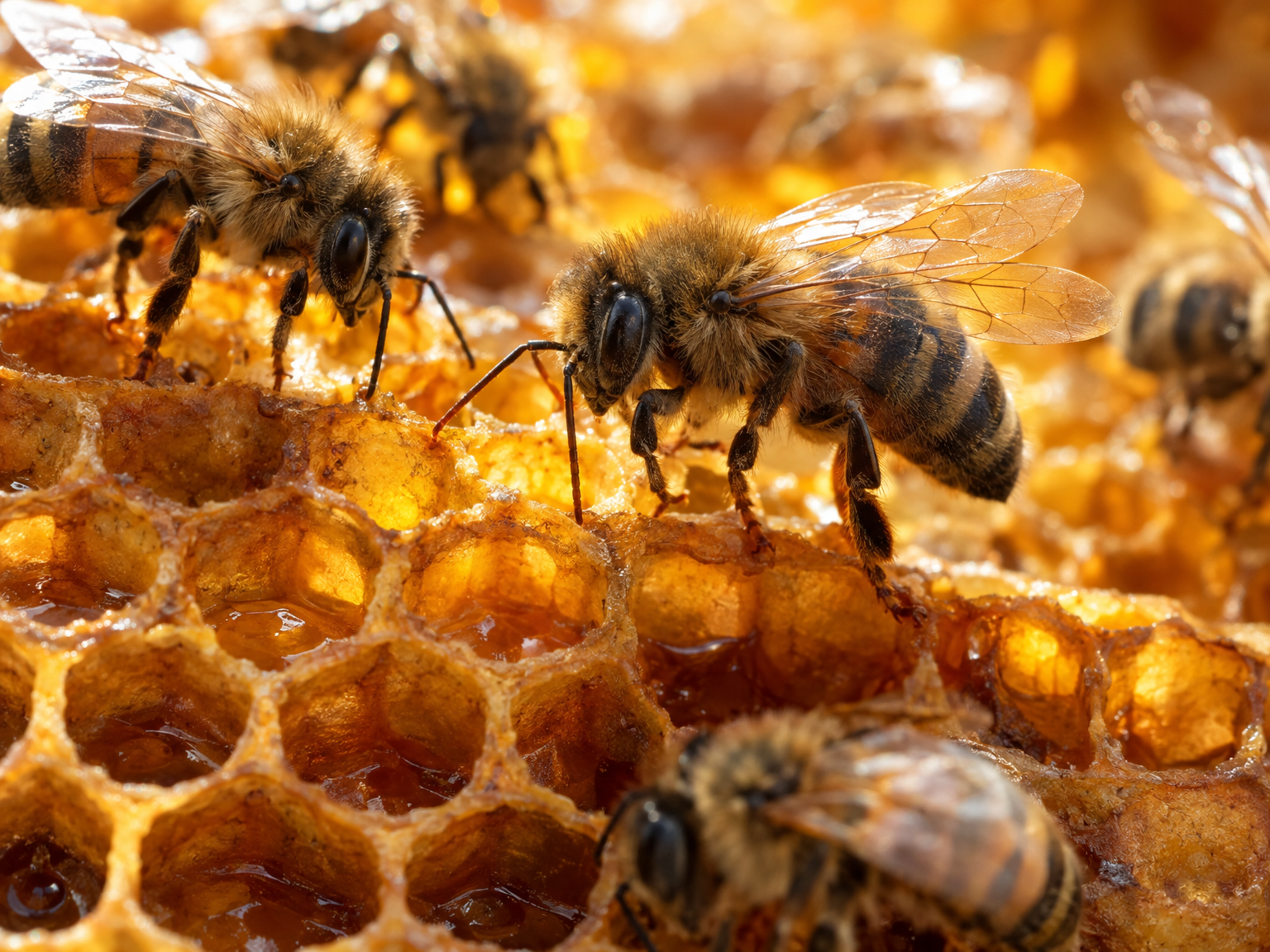
Close-up of capped honeycomb with bees working across the frames
Honey spent per 1 lb of wax
6–8 lb
Time saved with drawn comb
3–4 weeks
Brood break that stops Varroa
2–3 weeks
Harvests per season
2

What the standard model costs

Comb thrown away is honey thrown away

Crushing or melting comb each harvest forces the colony to rebuild 30 to 50% of its wax every season. Add a bought queen every year or eighteen months, routine chemical strips and routine syrup, and the hive becomes a subscription rather than a colony.

  • · Rebuilding wax costs the colony 6 to 8 lb of honey for every pound of comb.
  • · New comb means no spare capacity: supers fill weeks later than they would on drawn comb.
  • · Mites are managed with repeated treatments instead of the colony’s own brood cycle.
  • · One late harvest leaves the whole late flow unworked.

The method

Four parts, in the order they pay off

01

Keep every drawn frame

Comb is capital, not packaging.

Conventional extraction crushes or melts comb, so a colony rebuilds 30 to 50% of its comb every season. Bees spend 6 to 8 pounds of honey to make 1 pound of wax, and a colony with drawn comb ready gains 3 to 4 weeks it would have spent building.

  • Spin honey out, keep the comb intact, give the frames straight back.
  • Freeze extracted frames for 48 hours, then bag them sealed with a moth block.
  • Stored dry and sealed, drawn comb lasts for years.
02

Split on swarm pressure

Use the swarm impulse instead of fighting it.

Wait until the colony is genuinely ready to swarm, then take brood, bees and a queen cell into a new box. The parent colony raises a new queen and spends 2 to 3 weeks with no capped worker brood, which stops Varroa from reproducing at all.

  • Varroa needs capped brood to breed: a brood break starves the mites.
  • The parent comes into the flow with low mite counts and a young, peak-laying queen.
  • The split is a new colony, not a loss: it is your increase for the year.
03

Take two harvests

Map the bloom calendar, not the calendar on the wall.

Put supers on ahead of the spring flow and take a crop at peak summer, then put them back for the late flow and take a second crop in September. Each crop is lighter, but the year total is higher because the colony works at full strength twice.

  • Supers must be on before the flow opens, not during it.
  • Leave enough stores for winter after the second pull, and check the weight.
  • Two lighter crops are easier to dry and cap than one heavy late crop.
04

Raise queens from your own best

Local selection beats a delivery box.

Stop buying queens on a calendar. Raise queens from the colonies that reach swarm pressure, yield most and carry the fewest mites, and keep selecting from those for 3 to 4 generations.

  • Judge a colony on honey yield and mite count, not on looks.
  • Keep a simple record: yield, temperament, mite count, winter survival.
  • Locally raised stock is adapted to your flows, your winters and your mites.

The brood break

Three weeks without capped brood

Varroa can only breed under capped worker or drone brood. Take the queen cells out with the split, let the parent raise a new queen, and the mites run out of room.

  1. Week 0

    Split on swarm pressure

    Several brood frames, the bees on them and one sealed queen cell move into a new box on a new stand.

  2. Weeks 1 to 3

    The brood break

    The parent hive has no capped worker brood. Varroa cannot reproduce and the mite population crashes without any treatment.

  3. Week 3 to 4

    New queen laying

    The virgin mates and starts laying in a clean nest. The break ends exactly as the summer flow begins.

  4. Late summer

    Two colonies, low mites

    Both colonies are building. Mite counts stay below the treated colonies in the case study, and the second flow is still ahead.

Timing in Gauteng

Swarm pressure usually arrives October to December, as the first rains arrive and the jacarandas come into flower, and the main flow runs november to march: black wattle, jacaranda, sunflower, cosmos, eucalyptus and garden clover. Split when the queen cells are sealed, so the brood break finishes as the flow opens.

Change region in the colony plan

Two harvests

One season, two crops

The mentor’s calendar in Gauteng: supers on before november to march: black wattle, jacaranda, sunflower, cosmos, eucalyptus and garden clover, first crop taken at the top of the flow, supers back on for the late bloom, second crop in September. Then the hives are weighed against the 18 kg winter target.

ColonyQueens boughtHarvestsResult
Narrator, year threeEvery year1about 25 lb a hive, high mite counts
Mentor, 8 hivesNone in 7 years2no synthetic treatments in 4 years
Narrator, next seasonNone260 lb from 2 hives, beating 50 lb from 3

Your season

The method as a checklist

0 of 9 done · 0%

Drawn comb

Spring split

Two harvests

Local queens

What goes wrong

Four habits to drop

  1. 1

    Fearing the brood break

    Three weeks without brood looks like lost production. It is the mite reset that lets the colony work the late flow at full strength.

  2. 2

    Discarding drawn comb

    Convenience, or fear of wax moth, throws away weeks of colony work. Freeze for 48 hours, bag it, keep it.

  3. 3

    Buying the pest control

    Repeated synthetic treatments hit resistance and cost money. The brood break removes the mites’ breeding ground instead.

  4. 4

    Harvesting once, out of habit

    An August pull misses the late flow entirely. Learn when your second bloom opens and put supers on before it.

Try it on one hive first.

Split your strongest colony, keep every frame of comb, and weigh both hives in autumn. The hive log keeps the notes and the profile.